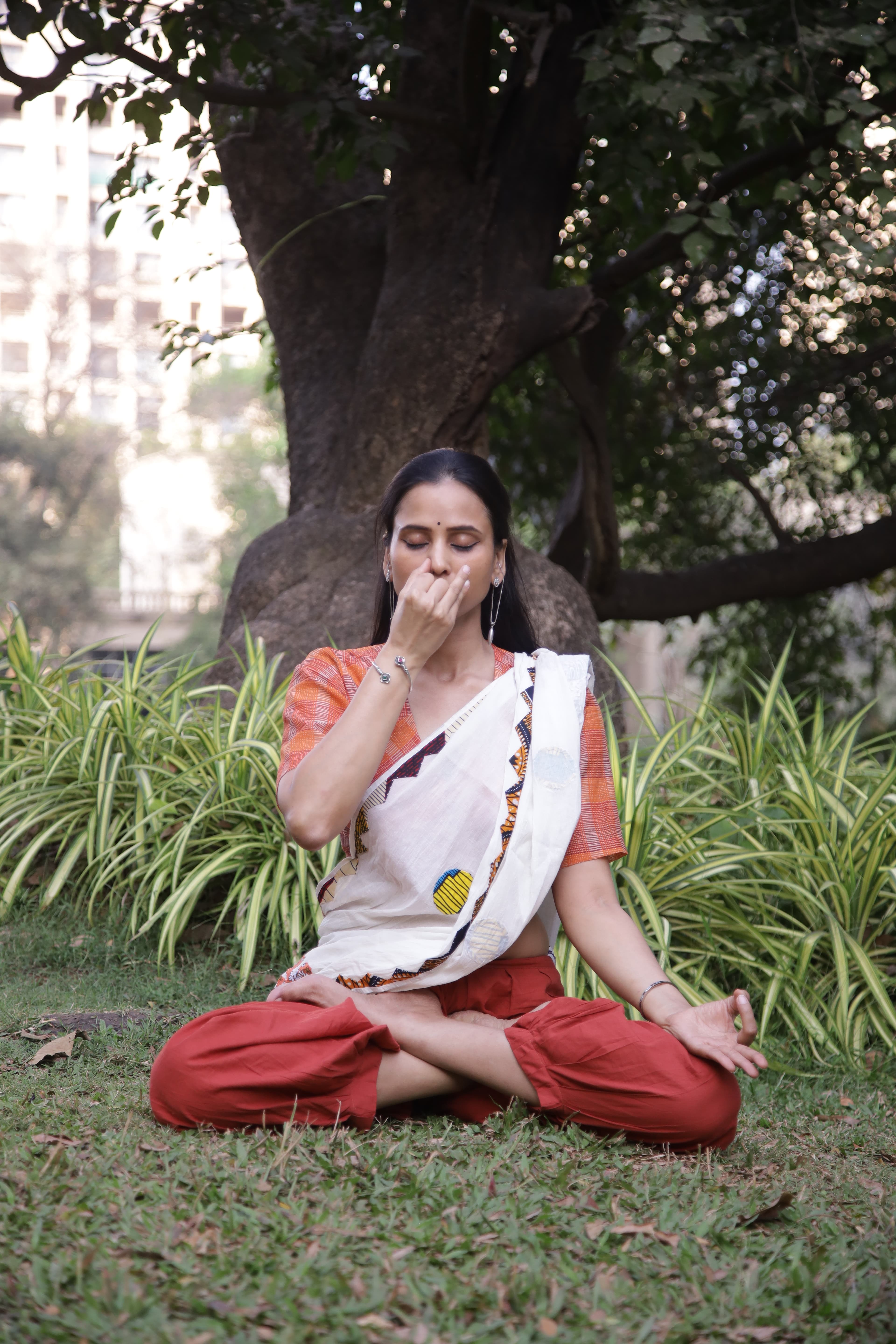
When people feel stressed, one of the most common suggestions they hear is: "Focus on your breath." "Do some breathing exercises."
And naturally, they try. Deep breaths. Guided videos. Different techniques.
Yet a common experience remains: the relief is temporary — or sometimes, it doesn't feel like it's working at all.
Breath Is Not Just a Technique
Most people approach breath as something to do. Inhale deeply. Exhale slowly. Follow a count.
But breath is not just a technique. It is a reflection of your internal state.
When the body is calm, breath naturally slows down. When the body is under stress, breath becomes shallow, irregular, and often unnoticed.
Trying to control the breath without addressing the state of the system often leads to temporary or superficial results.
Stress Is Not Only in the Mind
Stress is often thought of as something mental. But in the body, stress is a physiological condition.
It changes: how you breathe, how your heart rate behaves, how your muscles hold tension, how your body processes energy.
Which means: even if you "decide to relax," the body may still remain in a state of alertness.
And in that state, breathing techniques alone may not fully shift the system.
Why Breathing Exercises Feel Difficult Sometimes
If you've ever felt: uncomfortable holding the breath, restless while sitting, unable to slow your breathing — it's not because you're doing it wrong.
It's because your system is not used to that state.
A constantly stimulated system finds stillness unfamiliar.
So instead of forcing the breath to slow down, the body needs to be gradually brought into a state where slow breathing feels natural — not imposed.
Awareness Changes the Breath More Than Control
There is a difference between: controlling the breath and becoming aware of the breath.
Control tries to change the pattern immediately. Awareness observes the pattern first.
And often, when breath is observed without interference, it begins to settle on its own.
This shift — from doing to noticing — is what makes breathwork more effective.
Your Daily State Matters More Than a Few Minutes of Practice
Breathing for 5-10 minutes in a day is helpful.
But what matters more is: how you are breathing throughout the day, whether your breath is constantly shallow, whether your body remains in a state of rush.
If the rest of the day is spent in tension, speed, and constant stimulation — then a short breathing practice has limited carryover.
What Actually Helps
Instead of asking: "Which breathing technique should I do?"
It may be more useful to notice: how often you are aware of your breath, whether your breathing changes under stress, whether your breath remains steady or becomes irregular through the day.
But beyond observation, there is something more important. The system needs to be brought into a state where stillness becomes possible.
In yoga, this is reflected in the idea of "Sthira Sukham Asanam" — a posture that is steady and at ease.
When the body is worked in a way that gradually reduces restlessness, and the system begins to slow down, the breath starts returning to its natural rhythm.
Only when the breath settles naturally does it make sense to move towards structured breathing practices. Because breath is not separate from your state. It reflects it.
Closing Thought
Breath is not something you need to control all the time.
It is something you need to understand.
And when the body begins to feel safe and settled, the breath follows — quietly, naturally, without effort.